№ 02 · 2026 · open source
pporlock
Lets developers and LLMs intercept and rewrite everything the browser sees
- platform
- macos · chrome
- provenance
- per flow, structural
- agent access
- mcp
- licence
- gpl-3.0-or-later
- language
- python
- last commit
- 2026-09-05
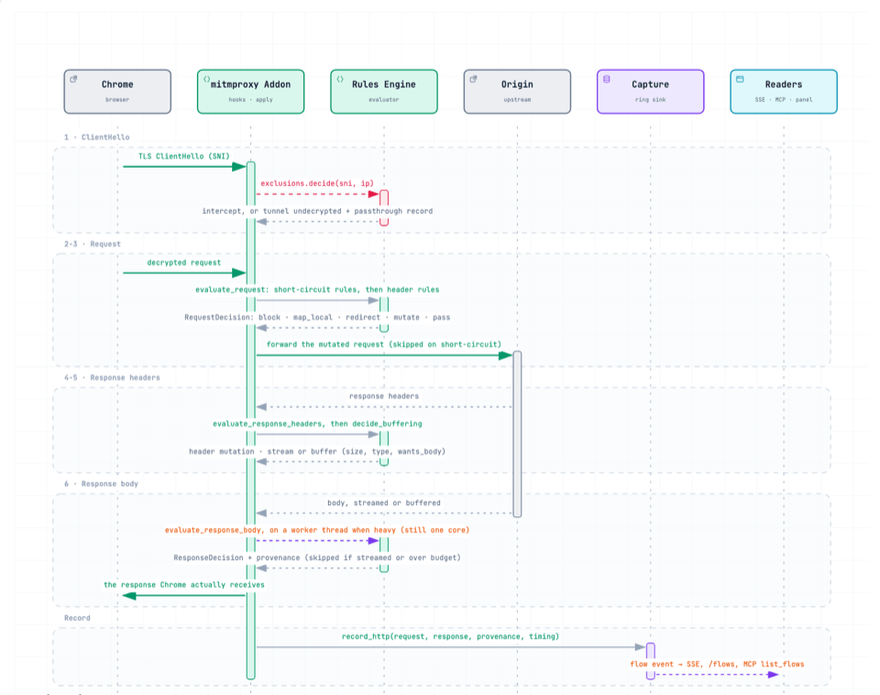
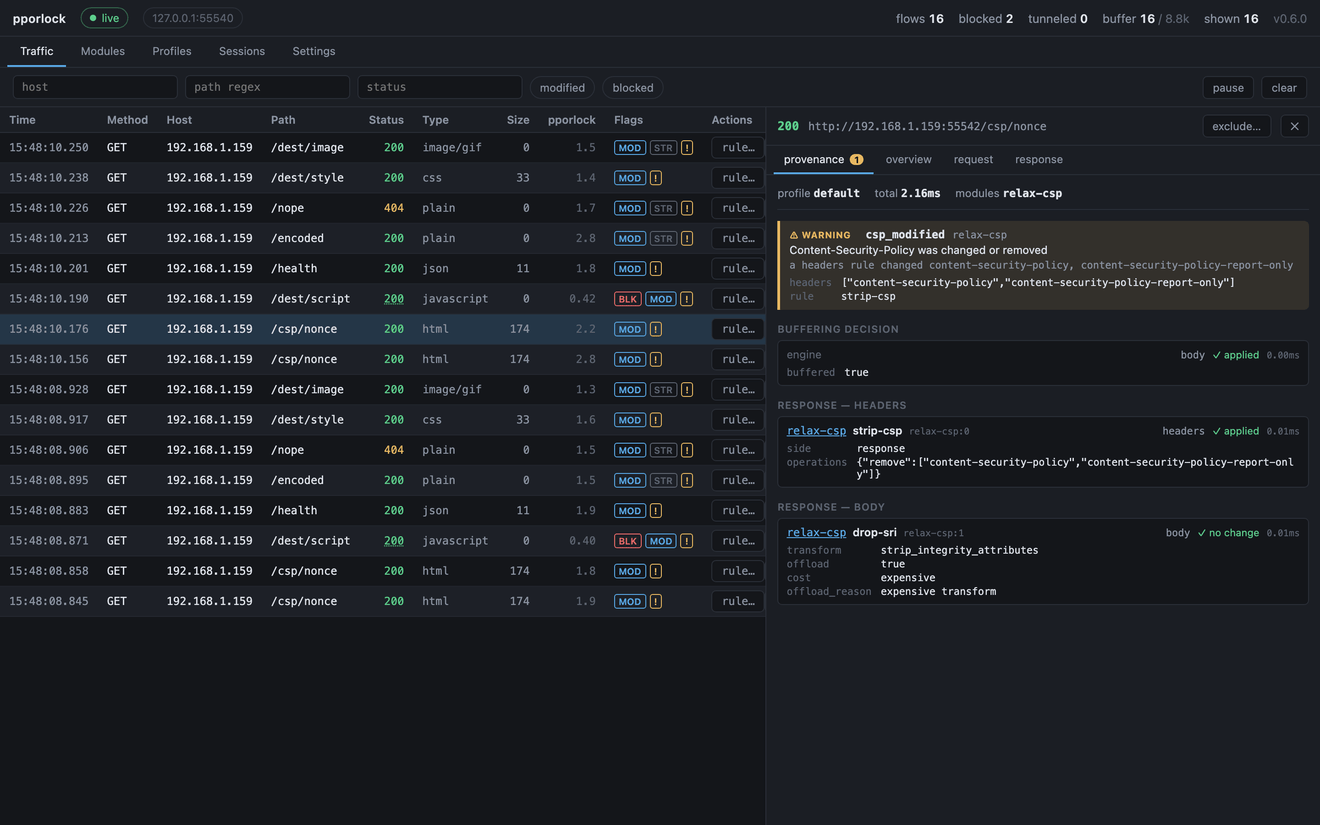
I built pporlock to explore how developers and agents can inspect and transform browser traffic, and what safe, observable agent interaction with web infrastructure could look like. As a web developer, I’m often wondering what’s actually being sent and received by my web browser. This is a a combination of an https proxy, a set of modules that allow you to instrument and alter what’s flowing through, and an MCP interface that can inspect traffic and develop new modules and capabilities. A chrome extension makes it easy to manage when it’s in use and what it’s doing.
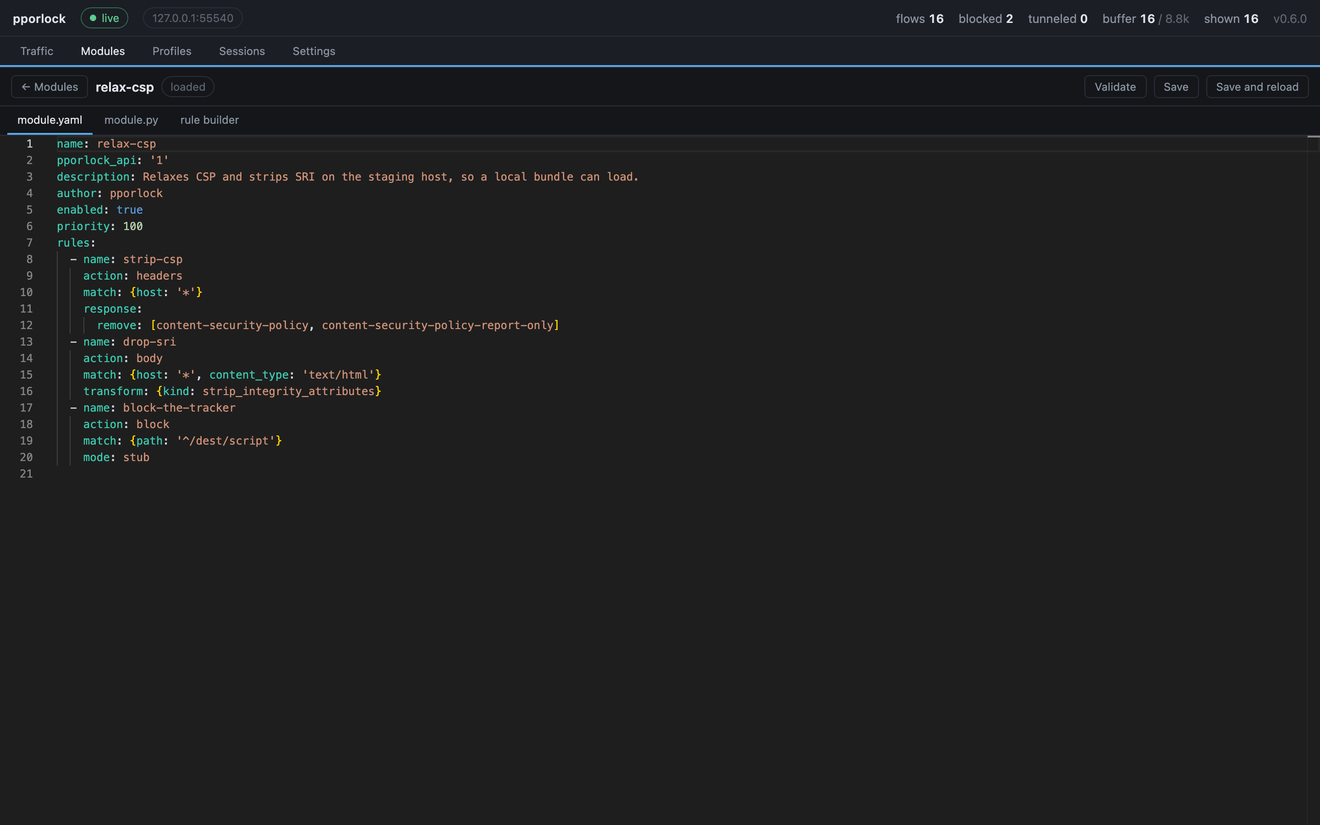
New modules are developed using a simple declarative language or with embedded python code. It comes with a set of examples and utilities:
- adblock - block traffic from known ad server domains
- cookie-banners - supress cookie warnings
- css-tamper - alter CSS elements as they go by
- json-tamper - alter JSON blocks
- ws-inspect- capture and inspect websocket traffic
- user-agent-switcher - emulate googlebot, an LLM scraper, or any other browser
- gpc-audit - send a global privacy control signal, and record the cookies that get set anyway
The MCP interface can monitor and capture traffic, develop a module to run the fix, and run the module against the shared traffic to make sure it worked.
The Agentic LLM integration was a great way to instrument the actual network traffic- but also the browser’s behavior. By selectively relaxing content security policies, I was able to pinpoint exactly what was breaking an external vendor’s site. I was able to diagnose a problem with our Global Privacy Controls and discover why we still had a cookie loading against user wishes. This last one had the potential to leave us with a significant GDPR violation, and the diagnosis was made much easier with this application.