№ 03 · 2026 · open source
Screenie
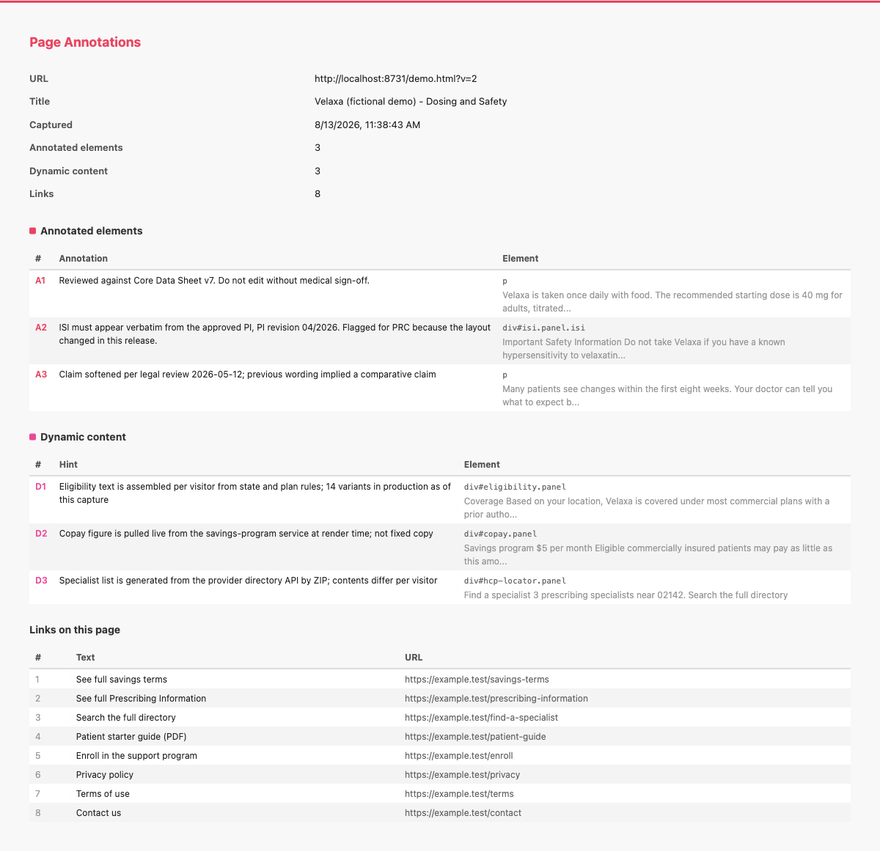
Captures and automatically annotates pages for MLR and PRC submission and FDA 2253
- output
- pdf · png
- stylesheet
- screen, forced on
- text
- selectable
- annotations
- from the markup
- language
- javascript
- licence
- gpl-3.0
- last commit
- 2026-09-12
I built Screenie around a problem familiar to people working in regulated digital publishing: generating the annotations and metadata needed for the regulatory compliance team to review the site without adding huge production delays. The project explores how a focused tool can close a compliance and workflow gap that larger platforms often leave unresolved.
We have complex review requirements in branded pharma communications. The process of preparing these is expensive- we need to pay an outside ad agency to screenshot the website, annotate, and then finally redline the PDF, and submit the full document to the MLR process before we can publish it. This leads to huge delays in our ability to bring medium or large size sites to market, as the review preparation can take days or weeks.
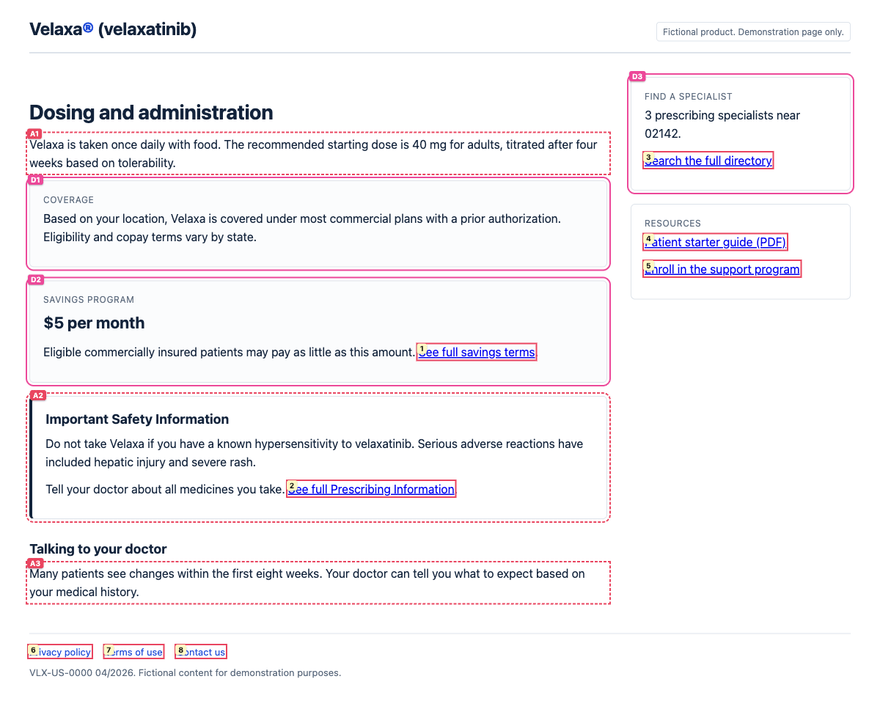
Screenie automatically generates these redlines and annotations by rendering the page within the browser, looking for links, but also looking for embedded CMS-inserted annotations. This means that the boxes and the labels always stay in sync, and the page that gets submitted is based on the one that was actually published. For responsive sites, it offers the ability to set page widths and faithfully demonstrate mobile and tablet breakpoints with the same annotations.